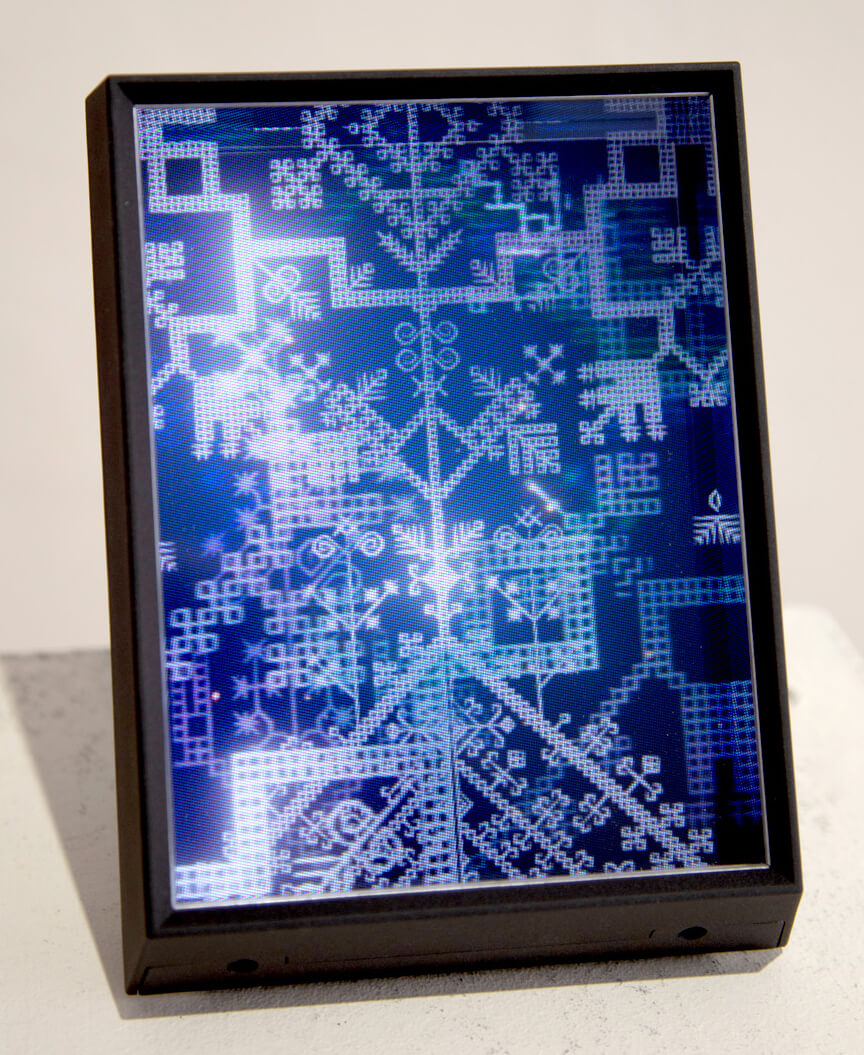
Yhtehsulavundu · Merging into One
A foremother’s vision, a holographic bird, and a wall from which the Tree of Life emerges · · ·
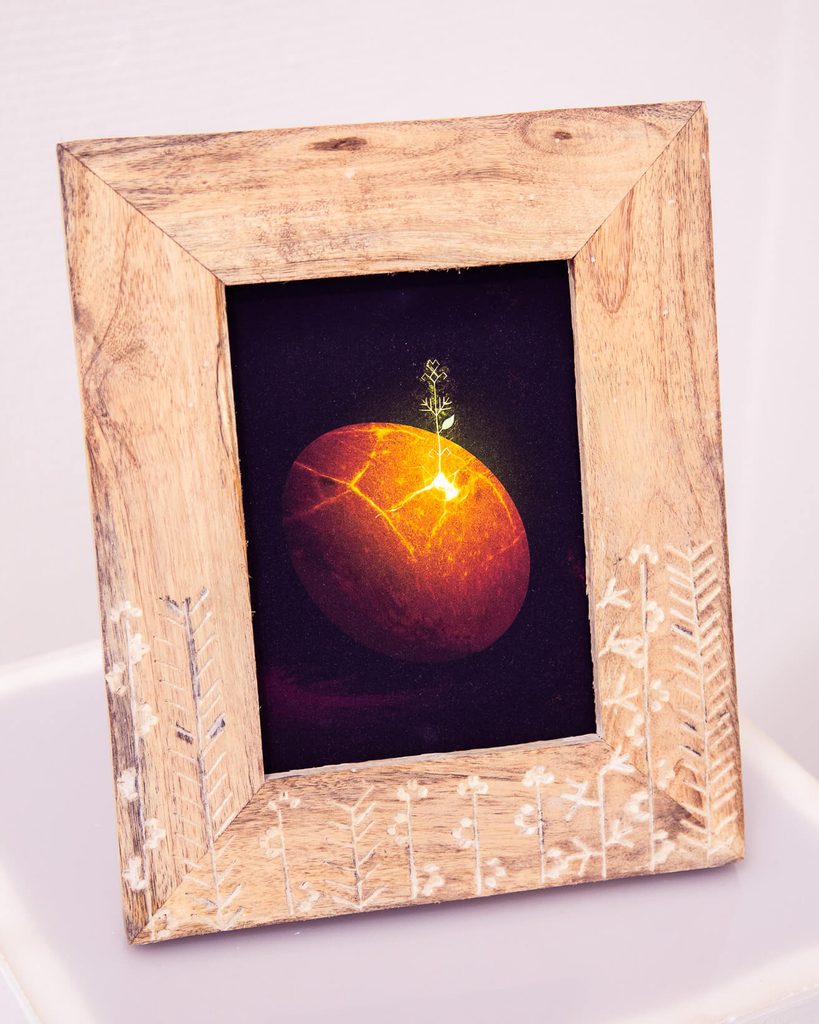
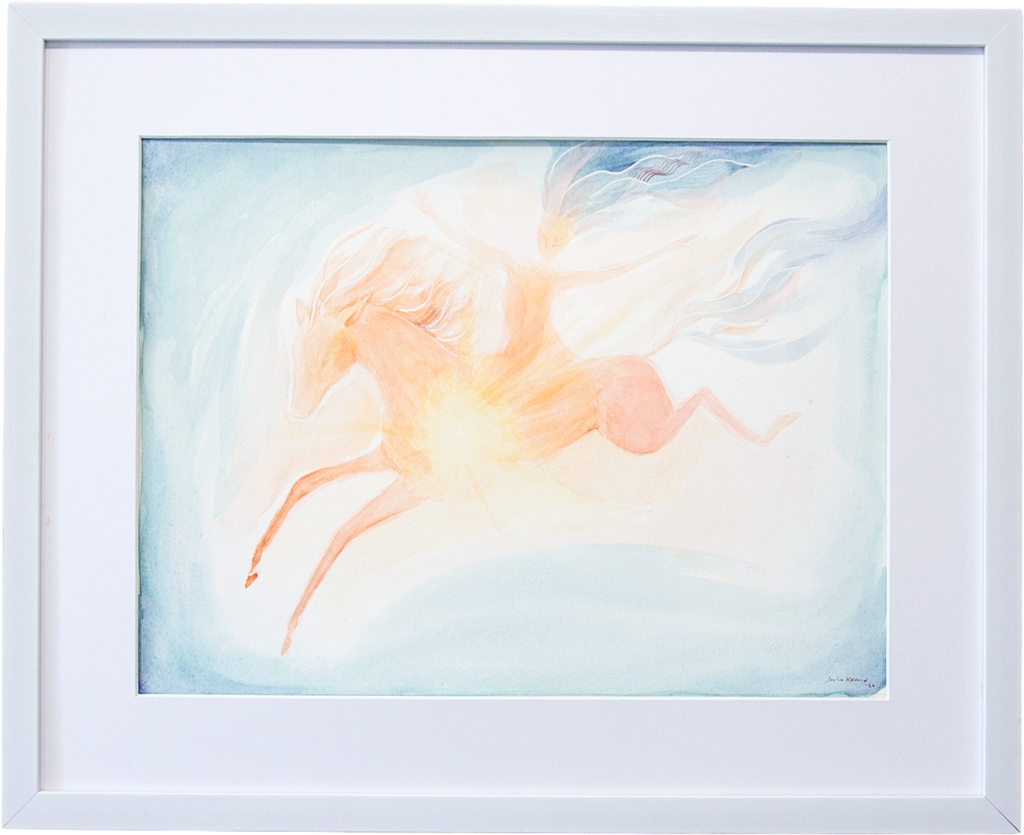
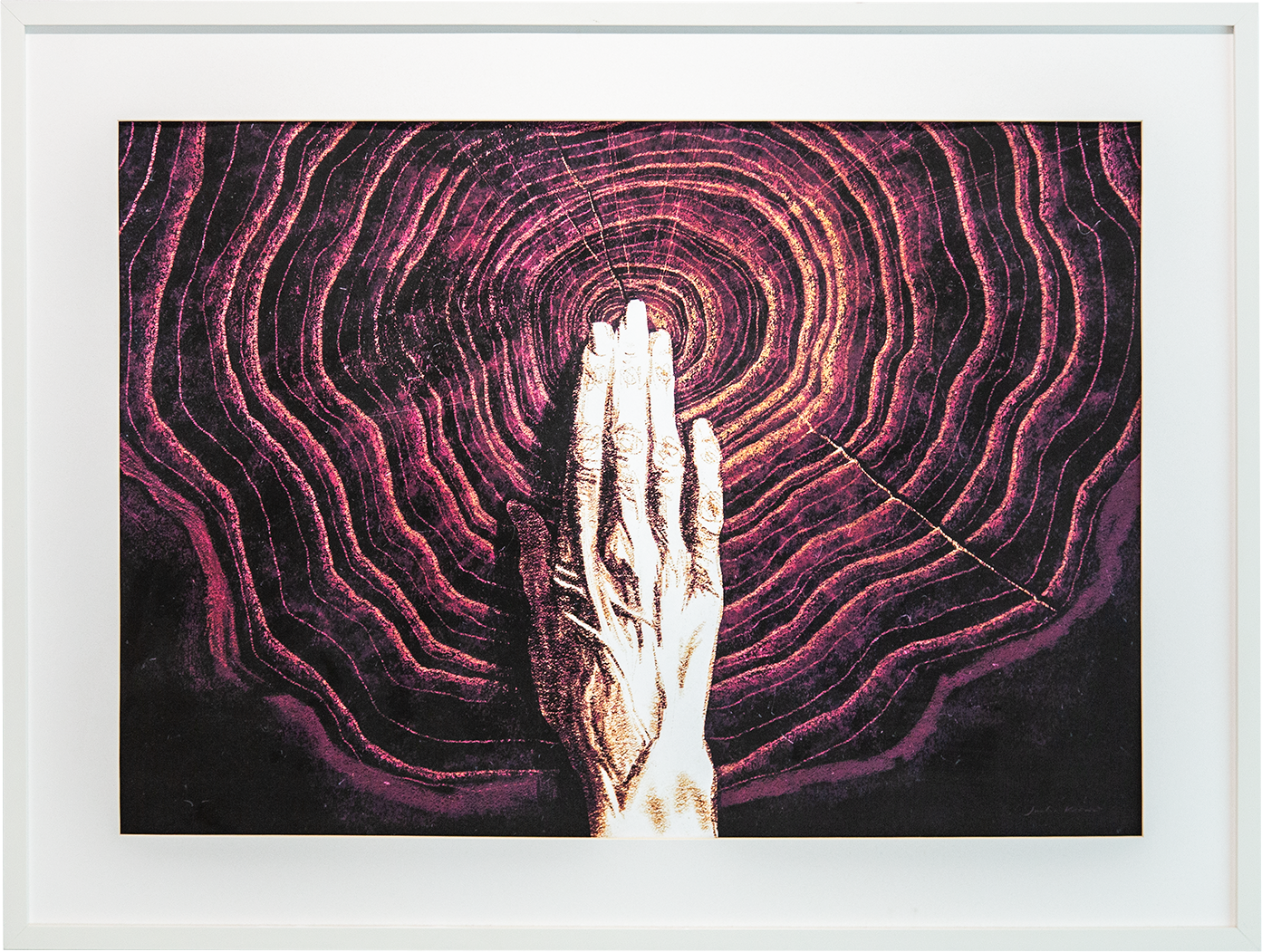
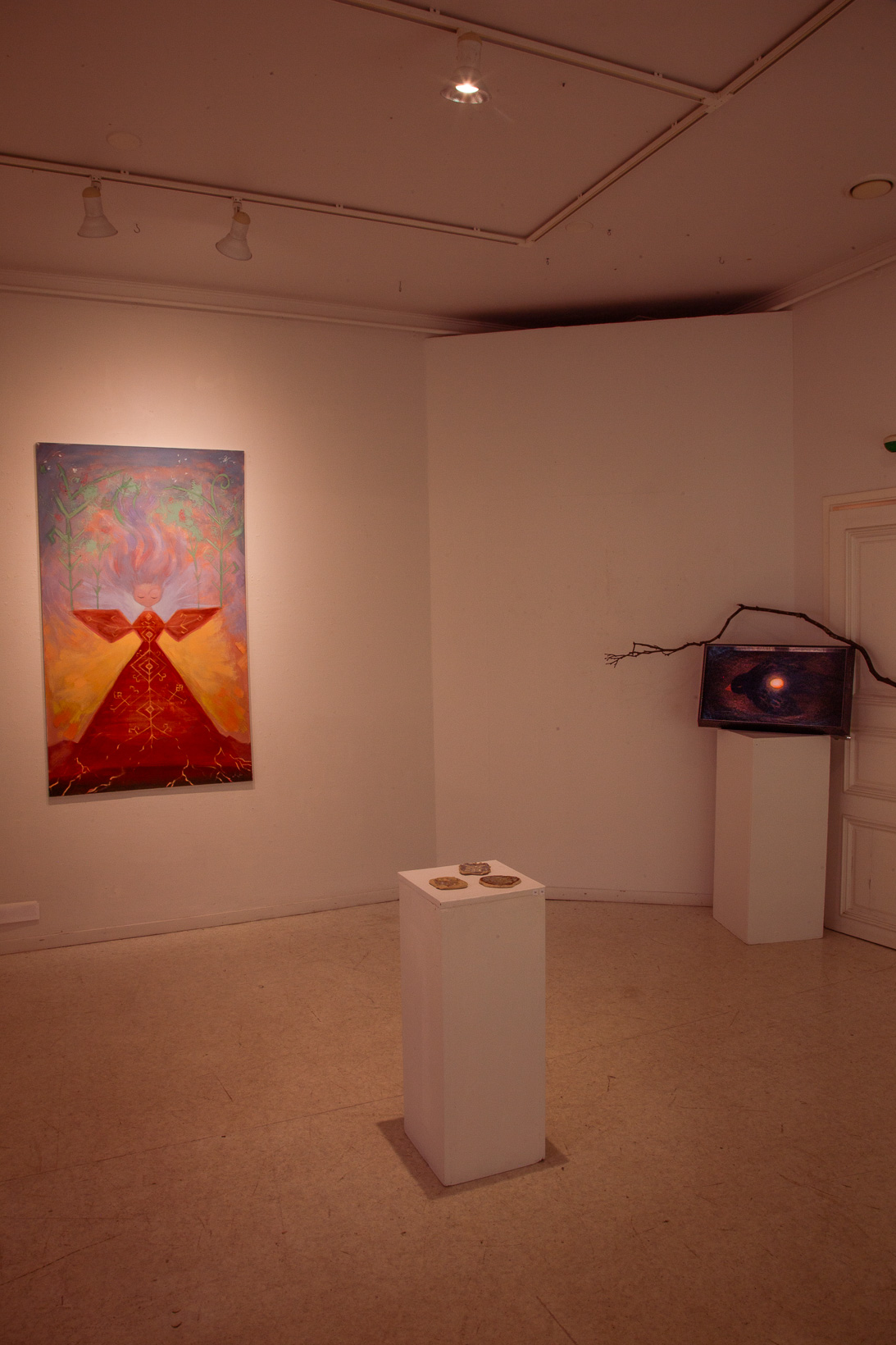
Yhtehsulavundu is Livvi-Karelian for merging into one. It is the moment when difference melts away: human and tree become one and the same, a horse and its rider gallop as a single light. A plant’s leaf becomes a bee’s legs.
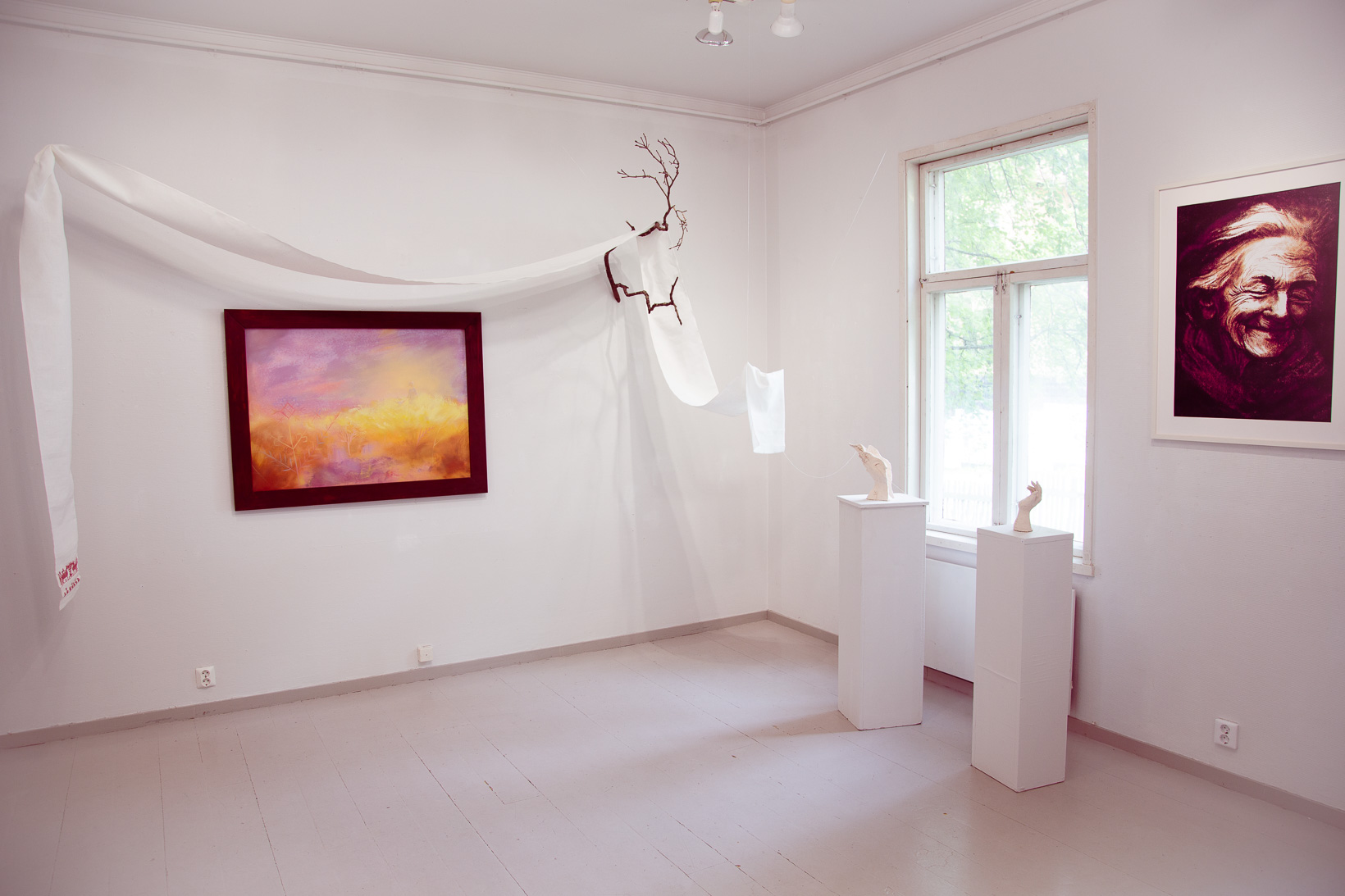
The exhibition was on view at Galleria Becker in my hometown of Jyväskylä, Central Finland, 26.6.–15.7.2026.
A foremother’s vision, a holographic bird, and a wall from which the Tree of Life emerges · · ·
Yhtehsulavundu is Livvi-Karelian for merging into one. It is the moment when difference melts away: human and tree become one and the same, a horse and its rider gallop as a single light. A plant’s leaf becomes a bee’s legs.
The exhibition was on view at Galleria Becker in my hometown of Jyväskylä, Central Finland, 26.6.–15.7.2026.
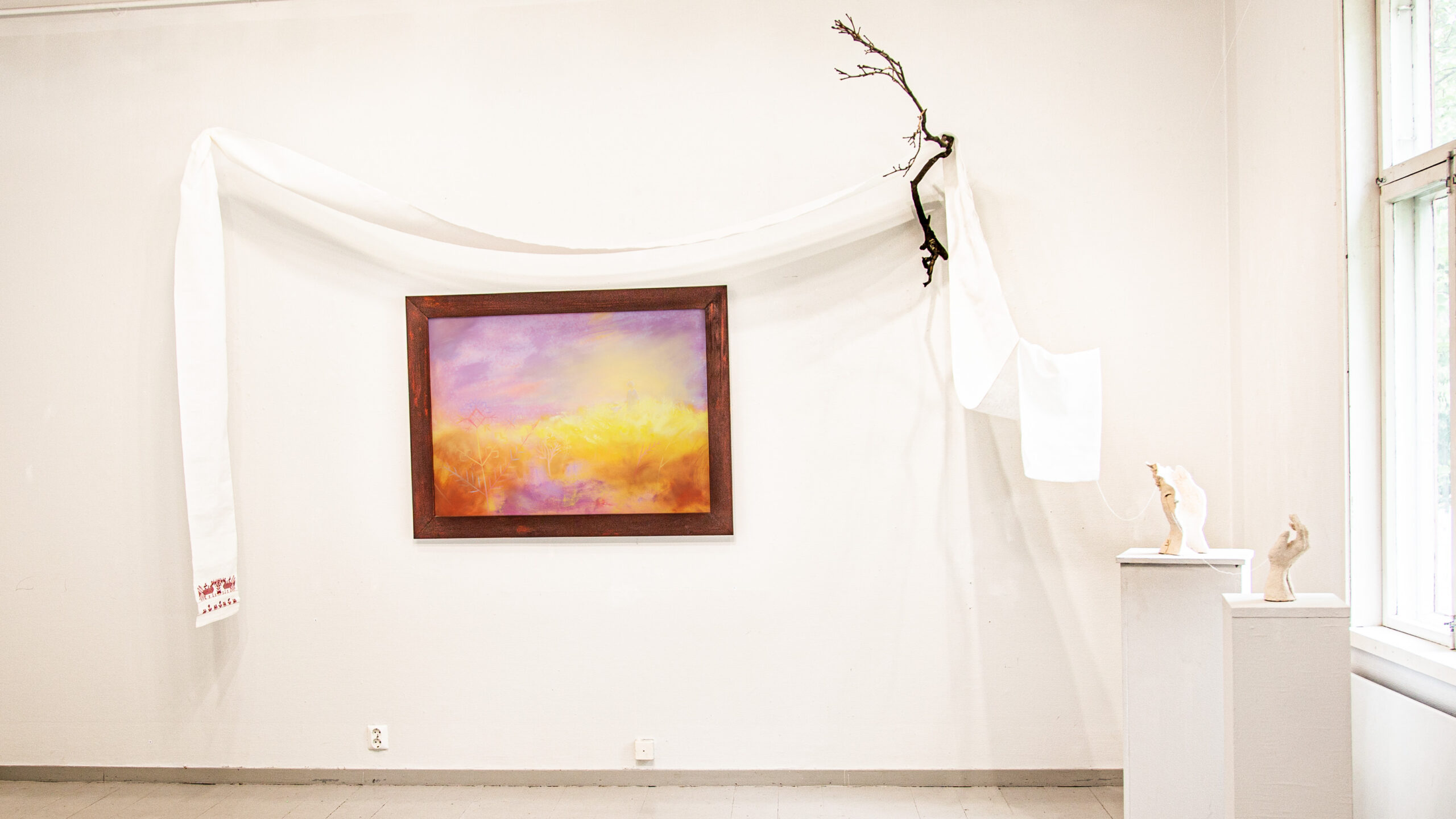
Karelian soil, imagined wings
The Karelians are a people whose homeland lies on both sides of what is now the Finland-Russia border. When Finland ceded Karelia during the Second World War, hundreds of thousands of people were evacuated west, my family and Julia among them.
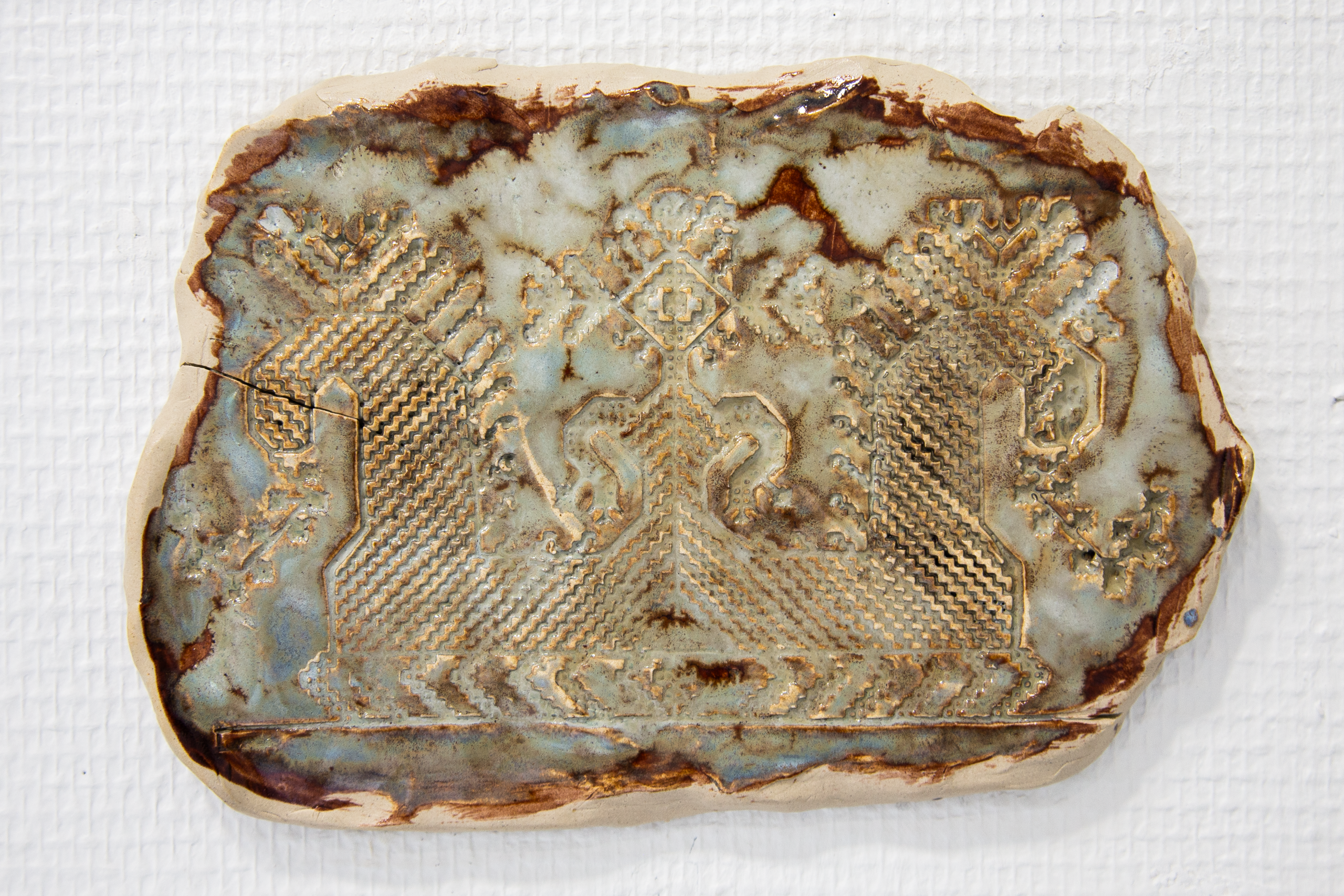
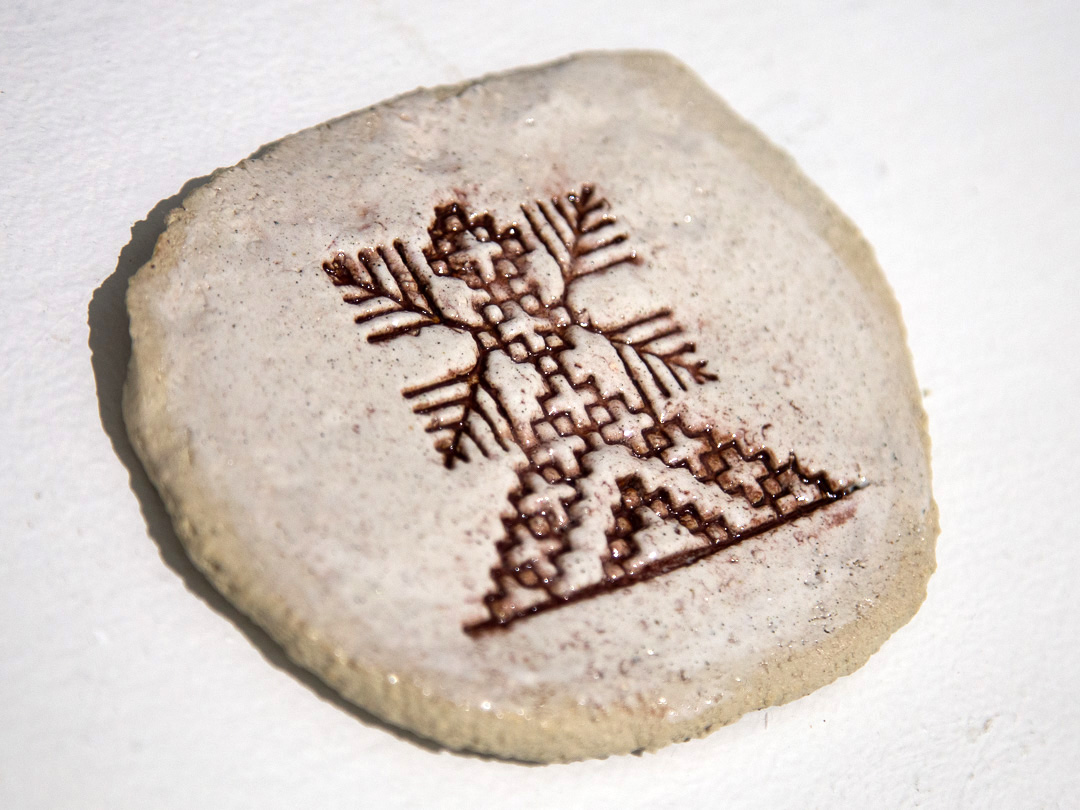
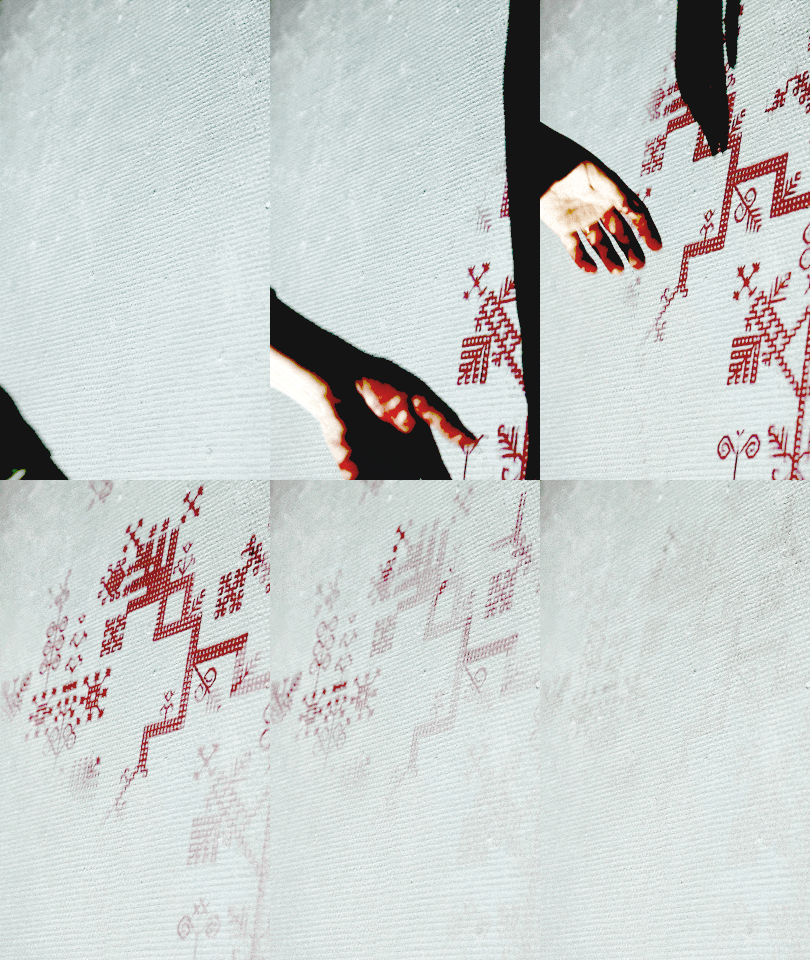
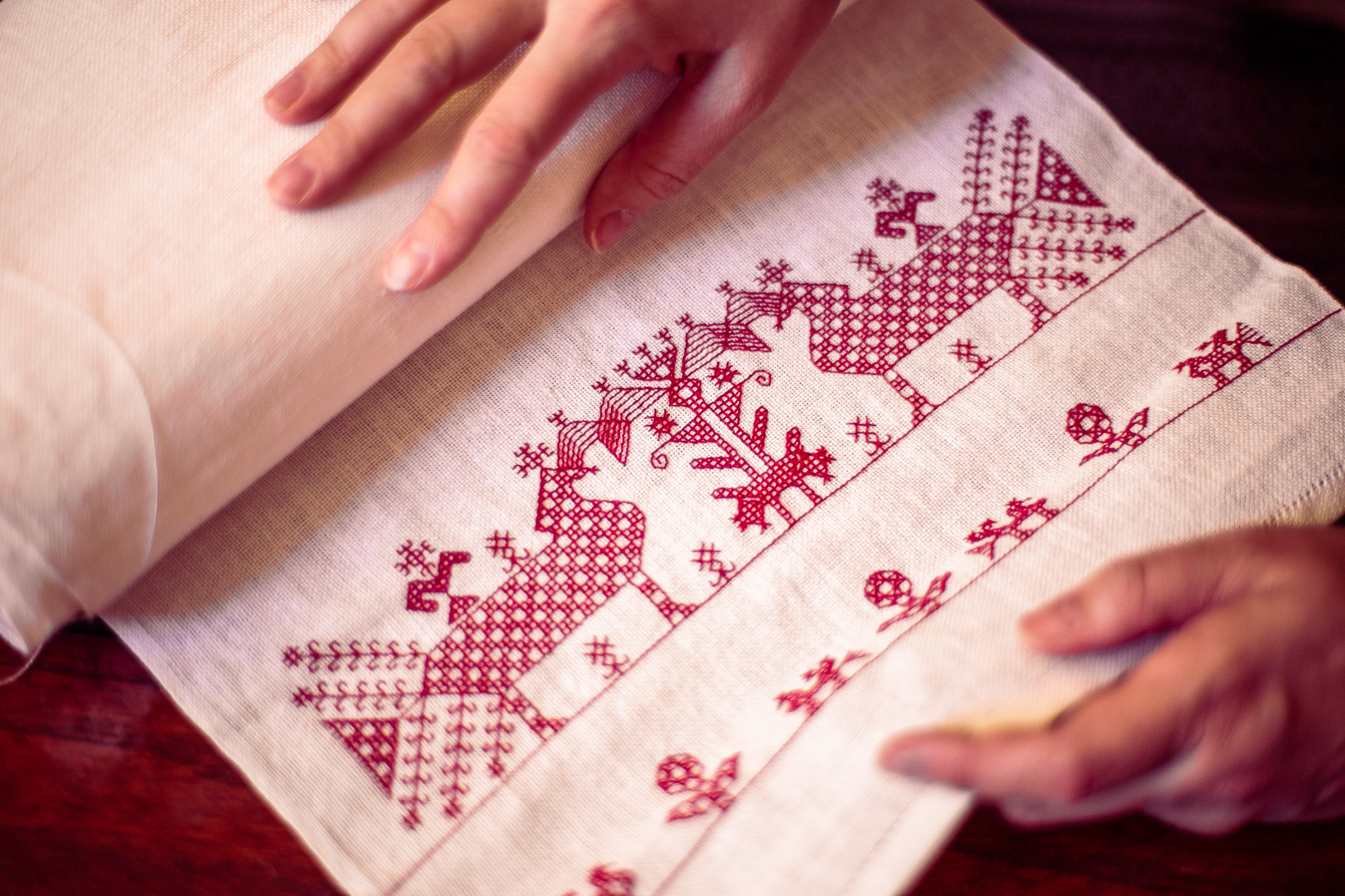
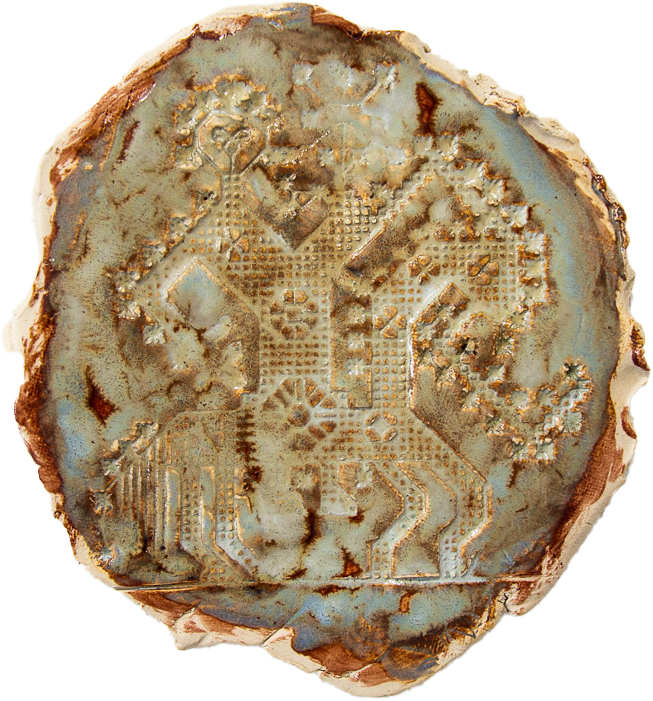
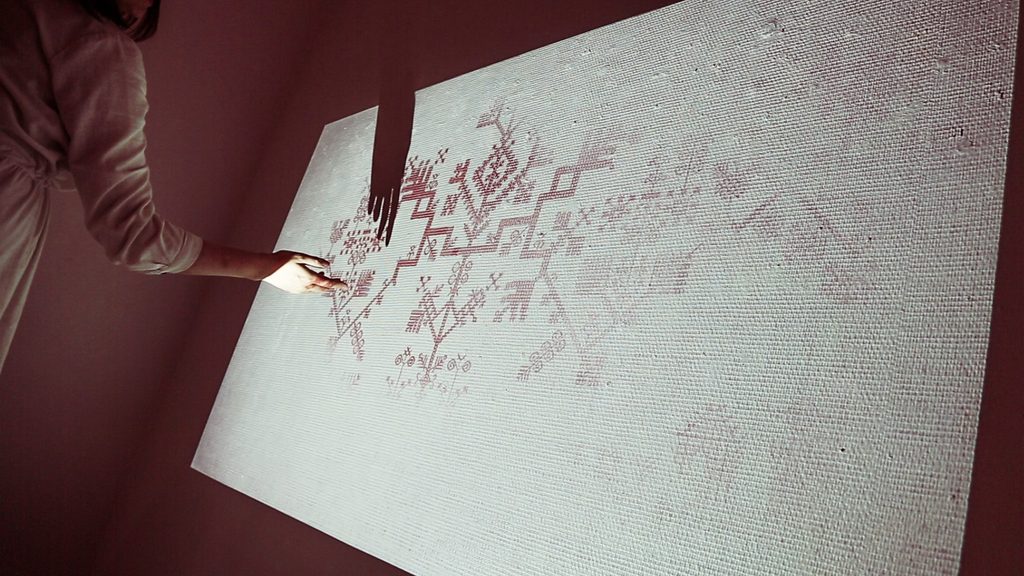
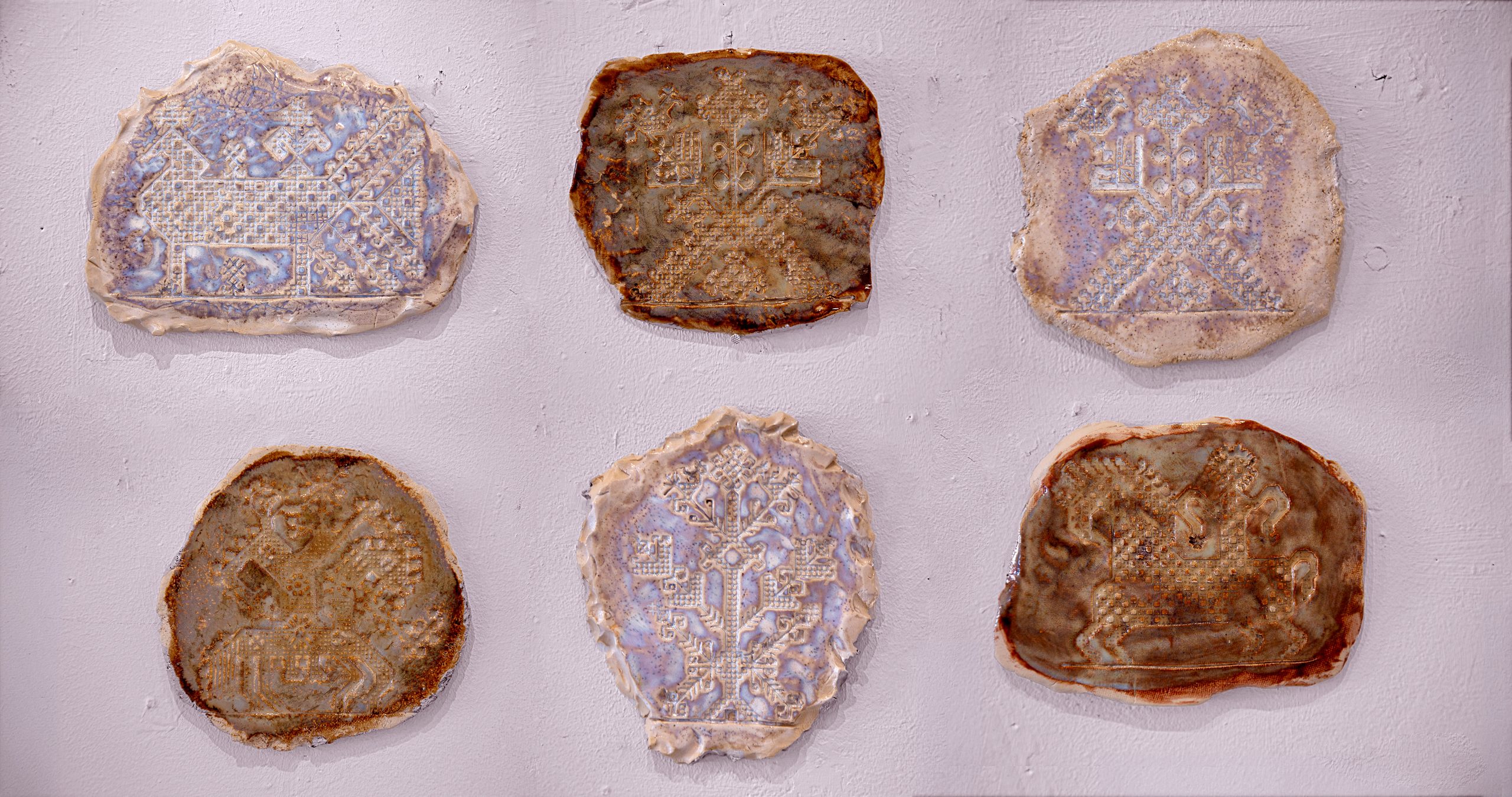
Yhtehsulavundu began as a way of finding my way back into my own hands and my roots. Every pattern here grows from Karelian textile tradition, passed down through generations of ancestors who stitched their world into cloth.
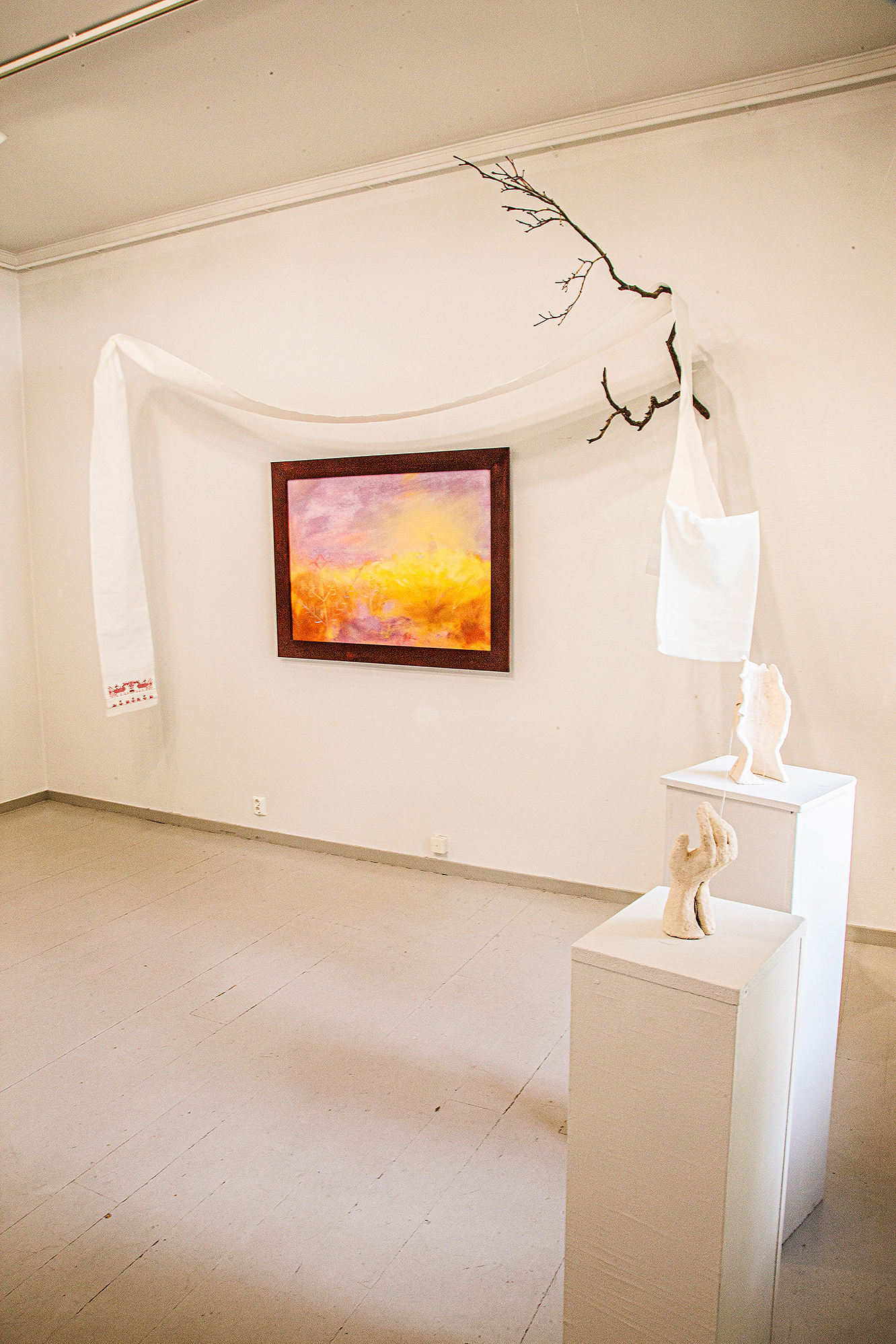
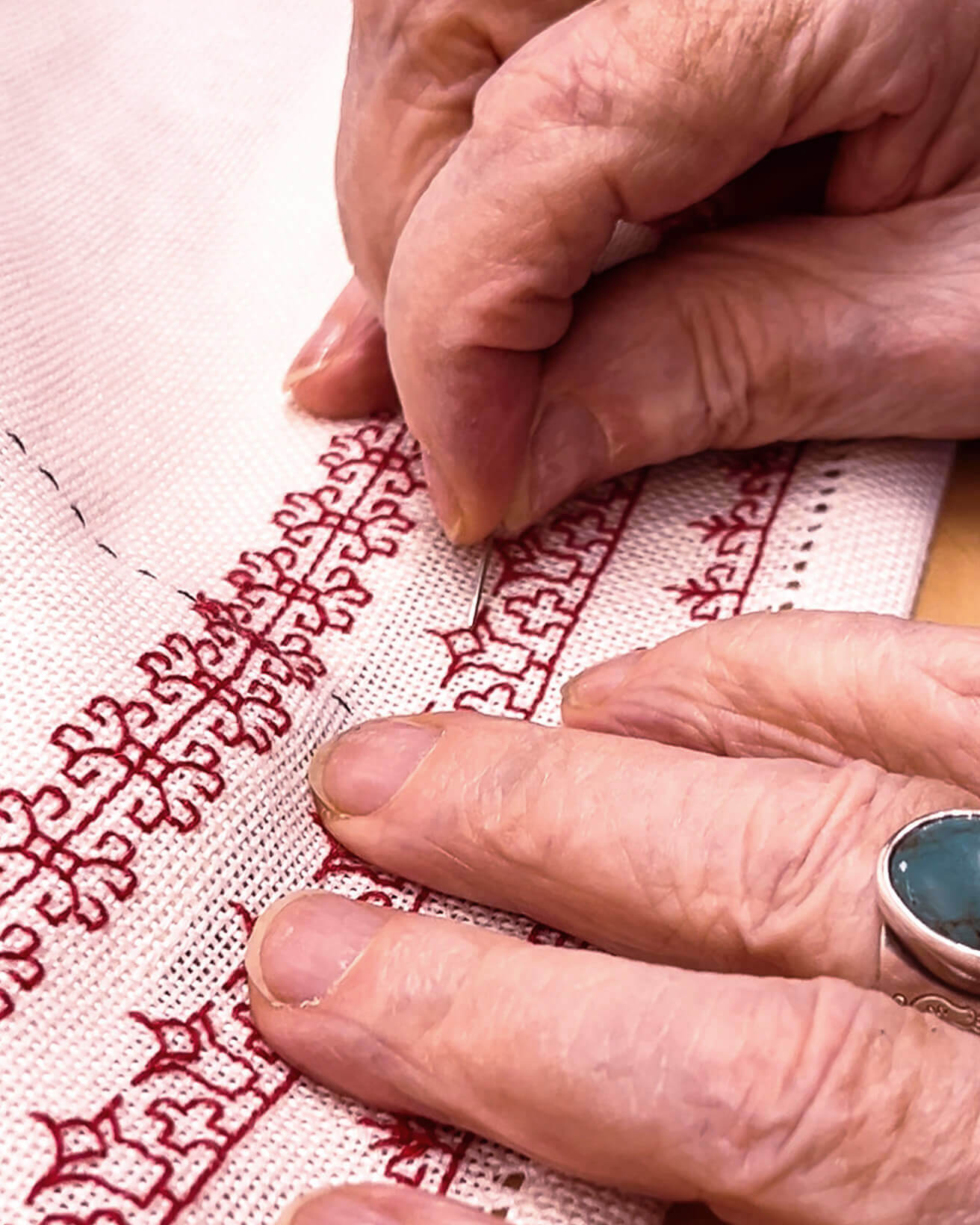
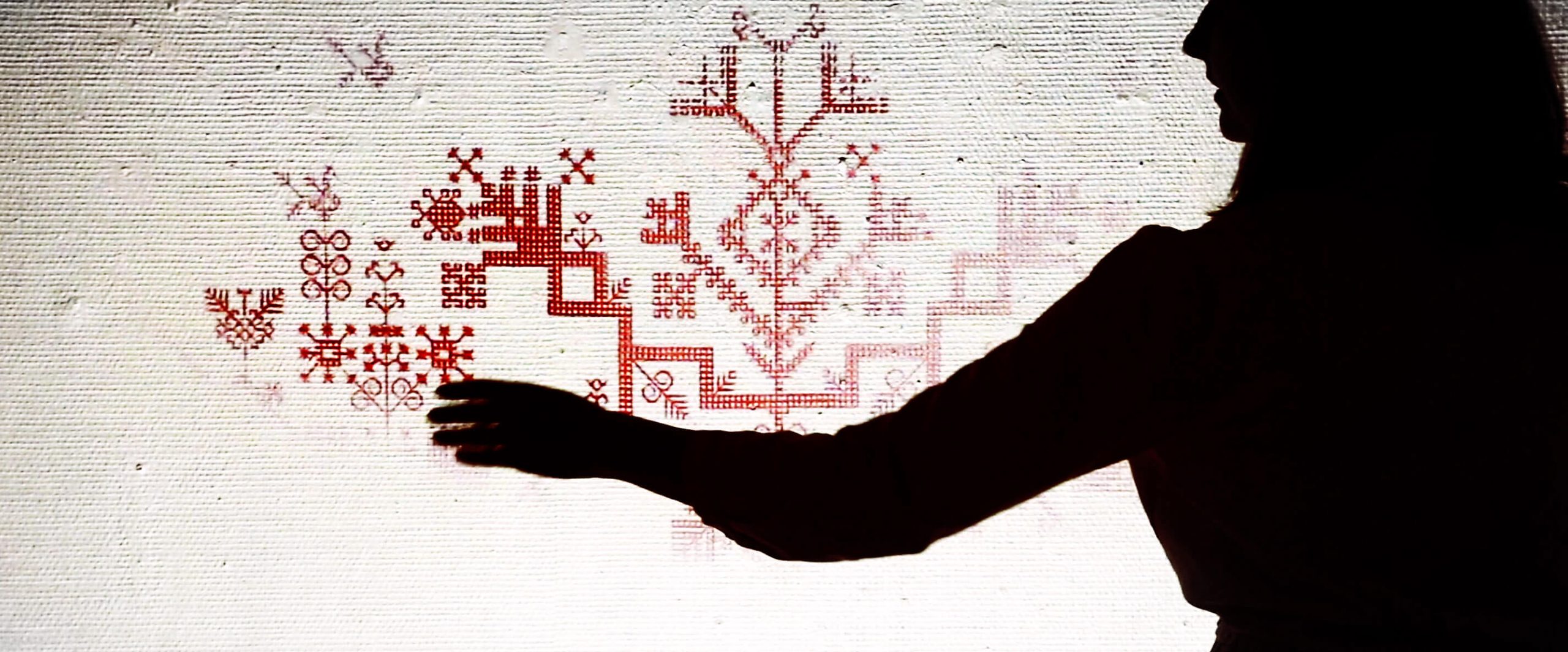
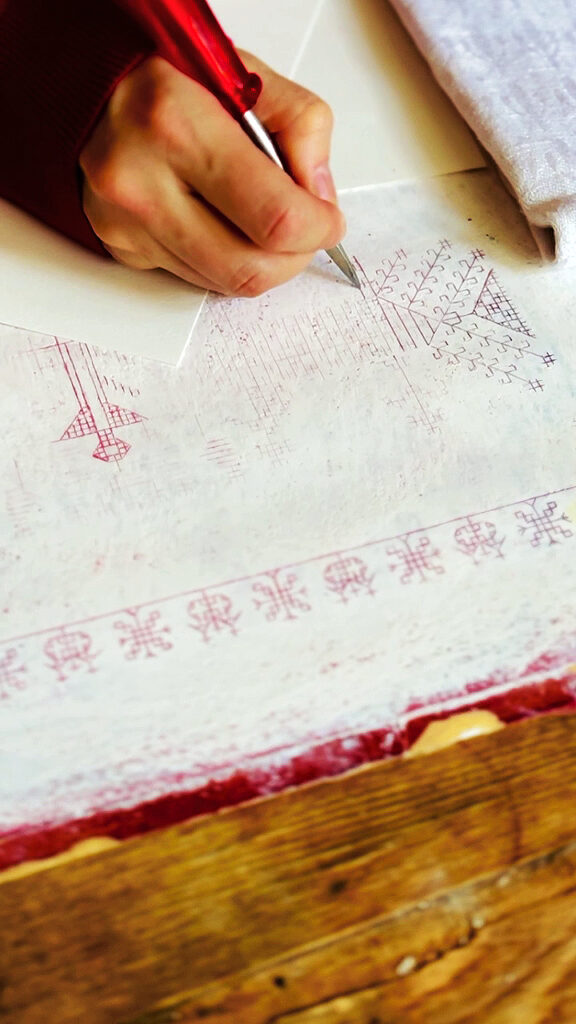
The work centers on the käzipaikku, a long ritual cloth that has been central to many Karelian people, through every threshold of life, from birth to death. I learned to make käzipaikku under the master Julia Salminen, a dear friend of my family. She was a Karelian evacuee from my grandmother’s native island, Mančinsuari, beyond the current Finnish border. She died in May 2026 at the age of 92, a month before this exhibition opened.
This exhibition holds a käzipaikku design that my foremother Feodosia Immonen, also from that island, made two hundred years ago. Working with it is a way of collaborating with my ancestor, using a visual language that transcends place and time. I intend to keep expanding it in the exhibitions still to come.
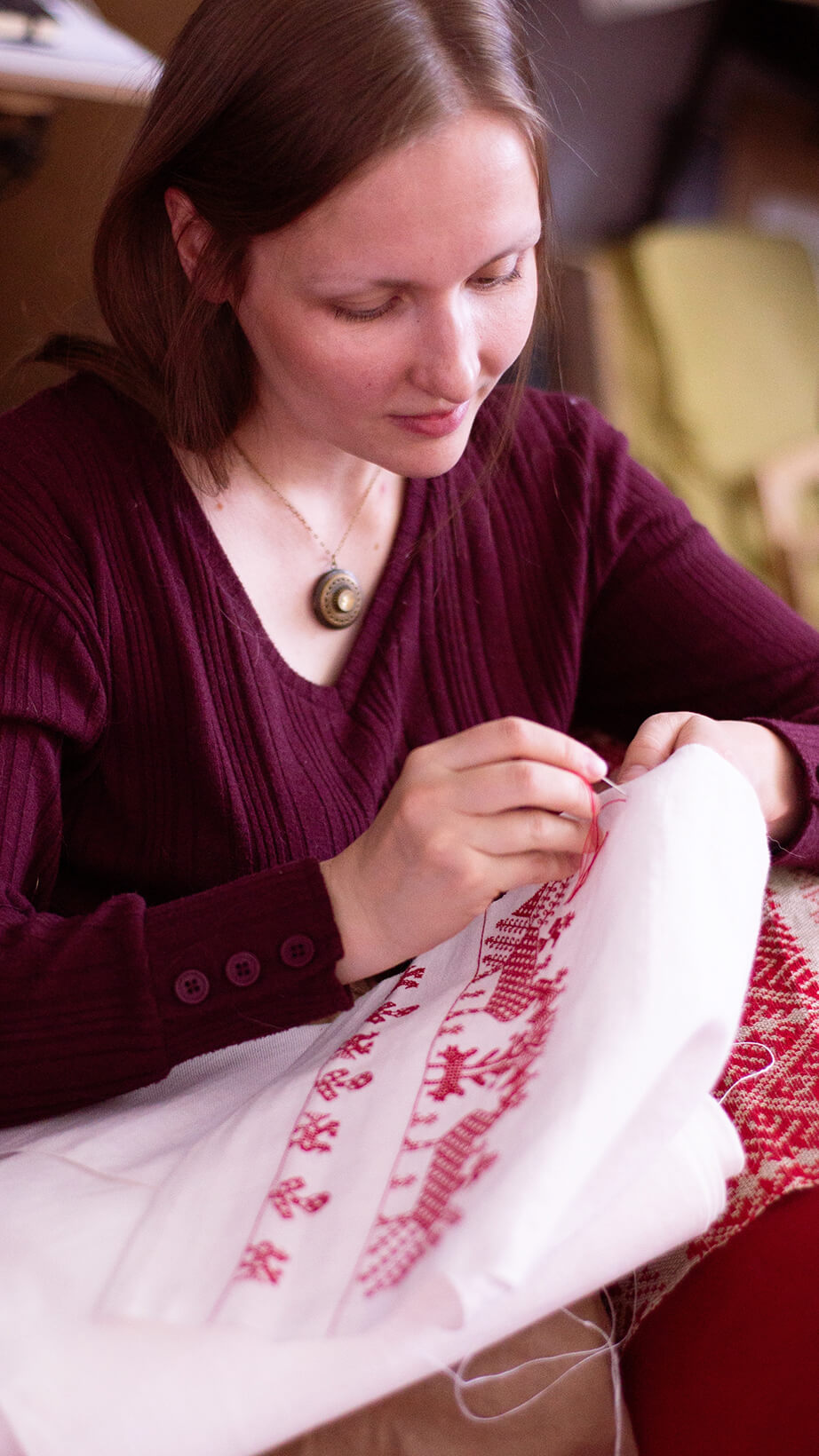
I use the oldest käzipaikku technique, the double running stitch (Holbein stitch; Finnish: etupistokirjonta), a reversible technique that produces identical designs on both sides of the linen cloth. I create and gift käzipaikkus for those closest to me in accordance with Karelian tradition.
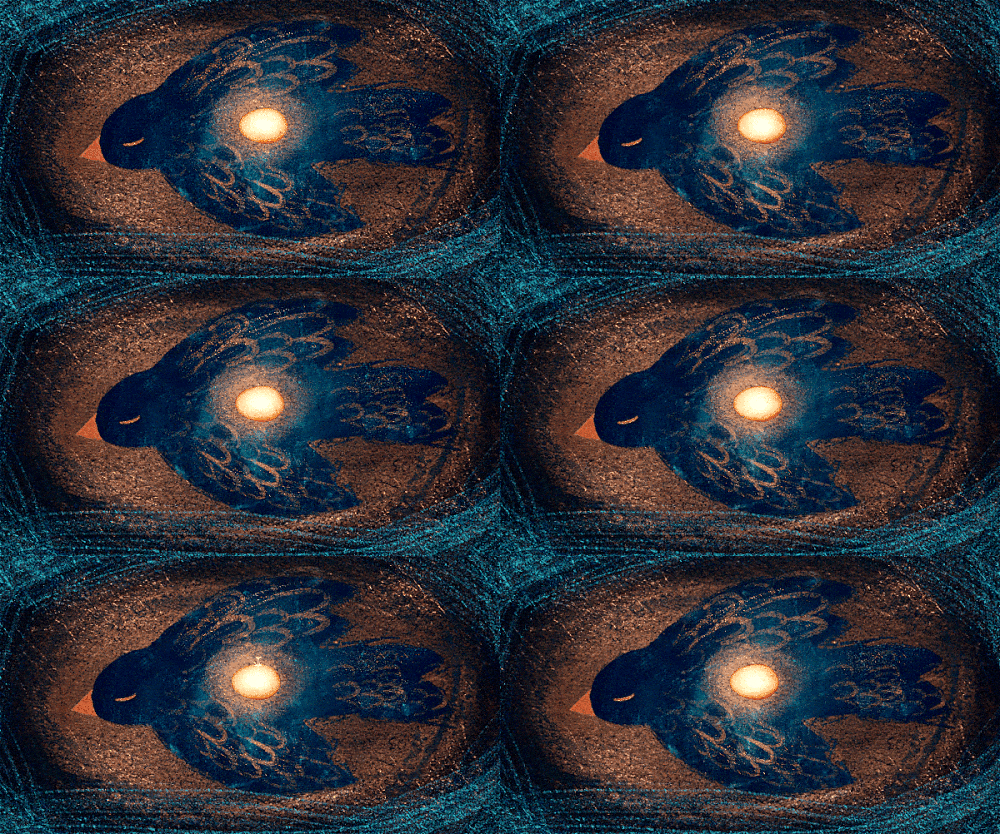
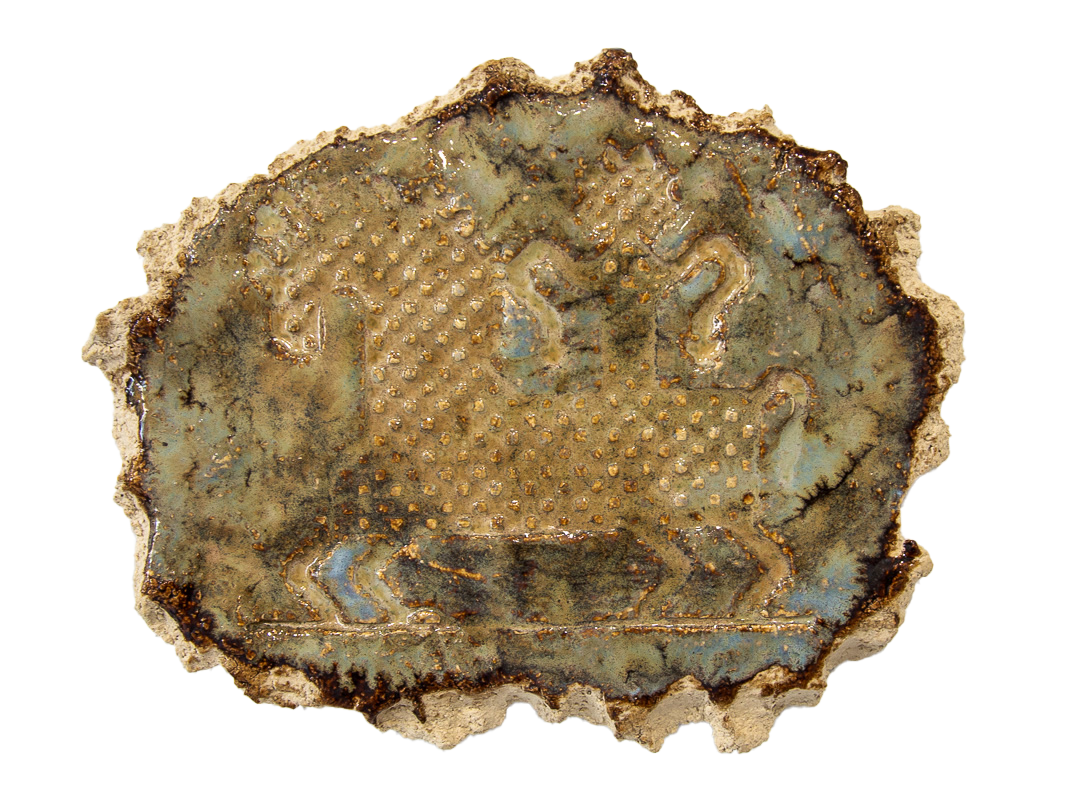
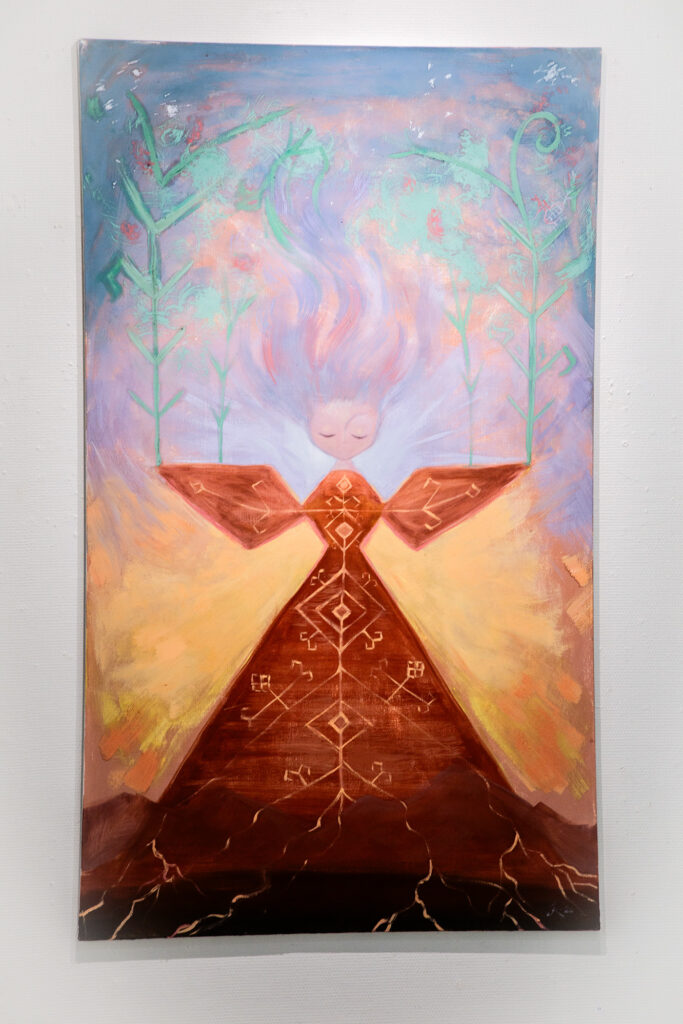
In the timeless symbols of käzipaikku, one can see a fusion between human and nature. The human, the botanical, the divine, can all appear in one symbol. Horse and rider glide as one. The bird and the horse can also be one and the same: in them, strength and freedom merge.
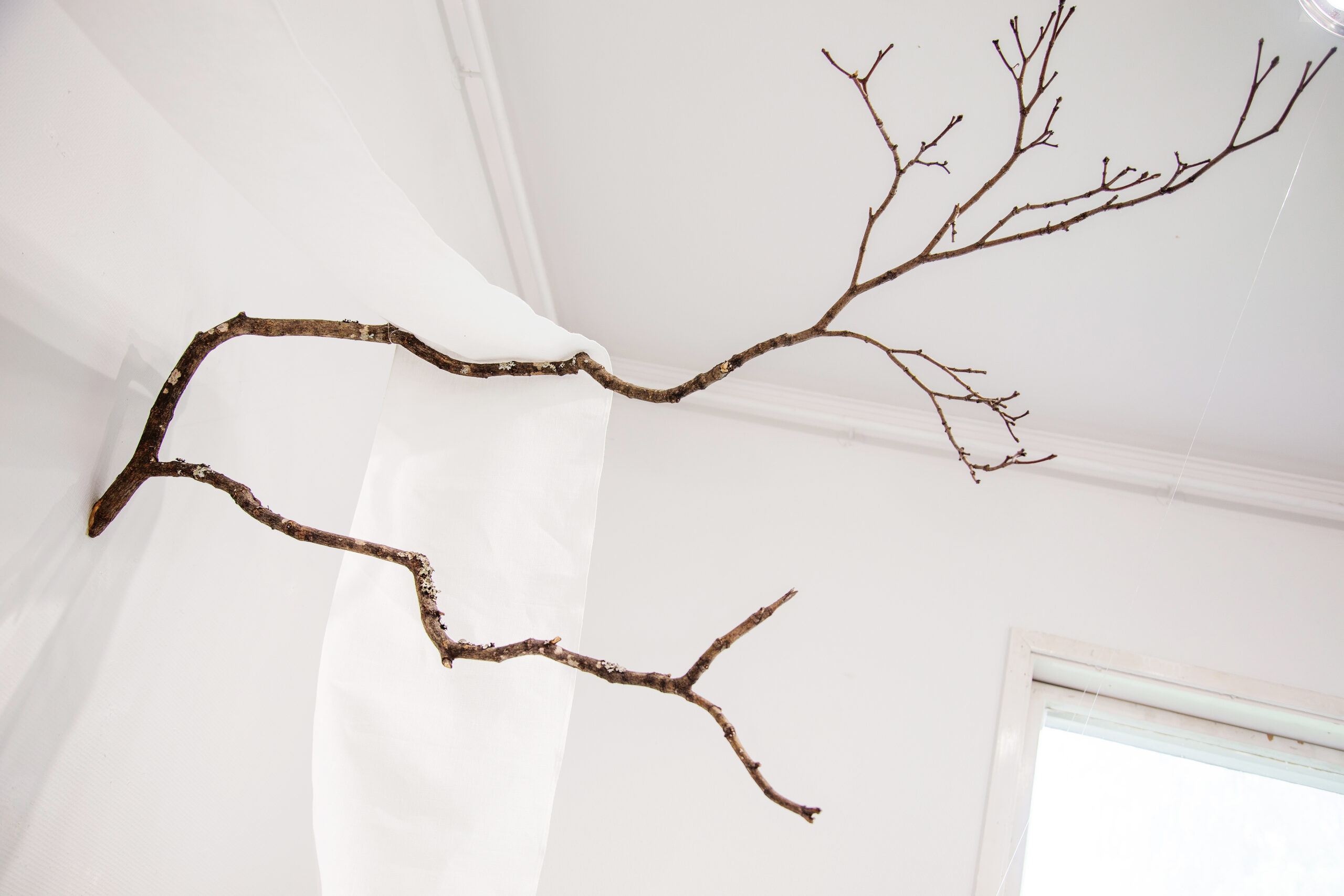
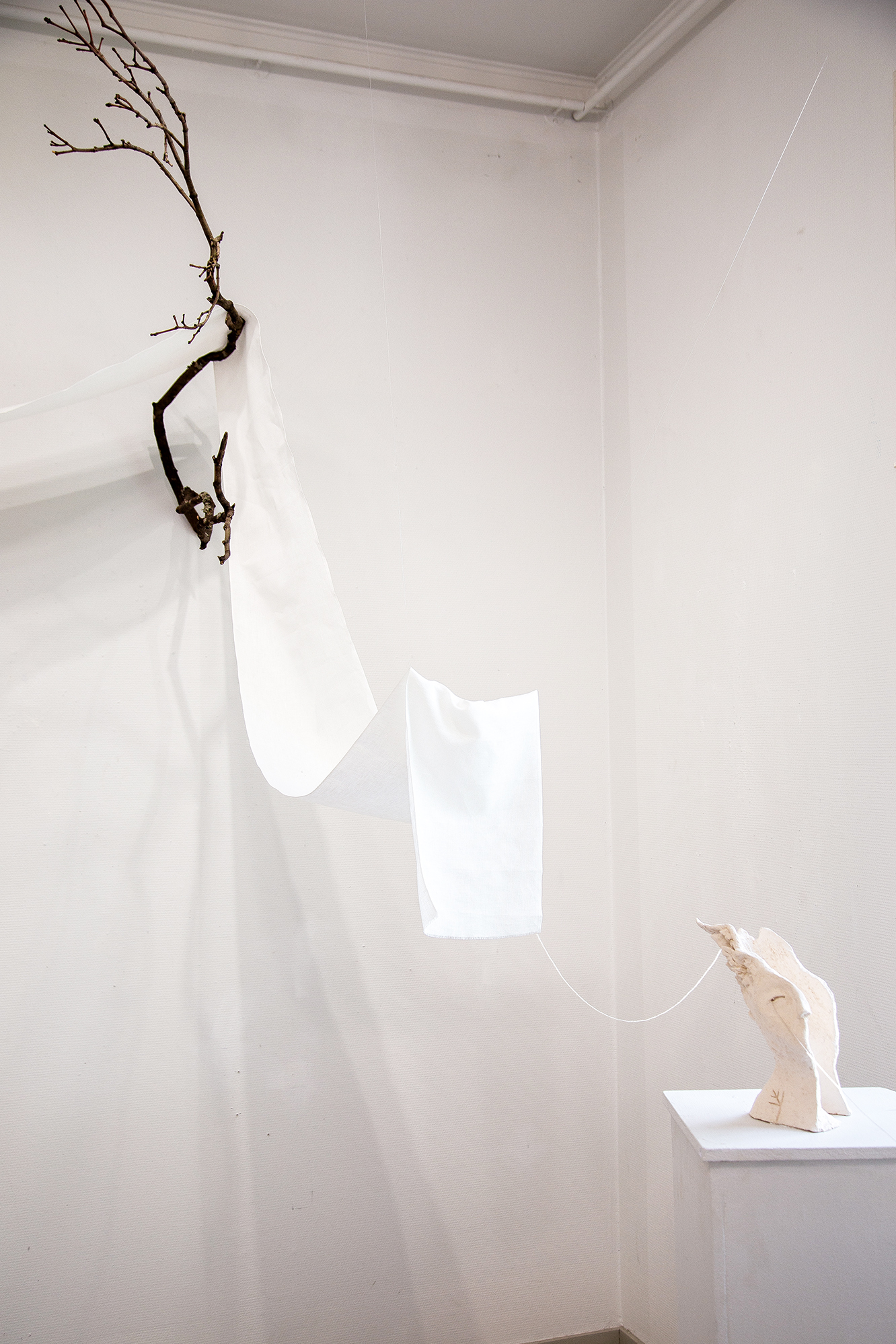
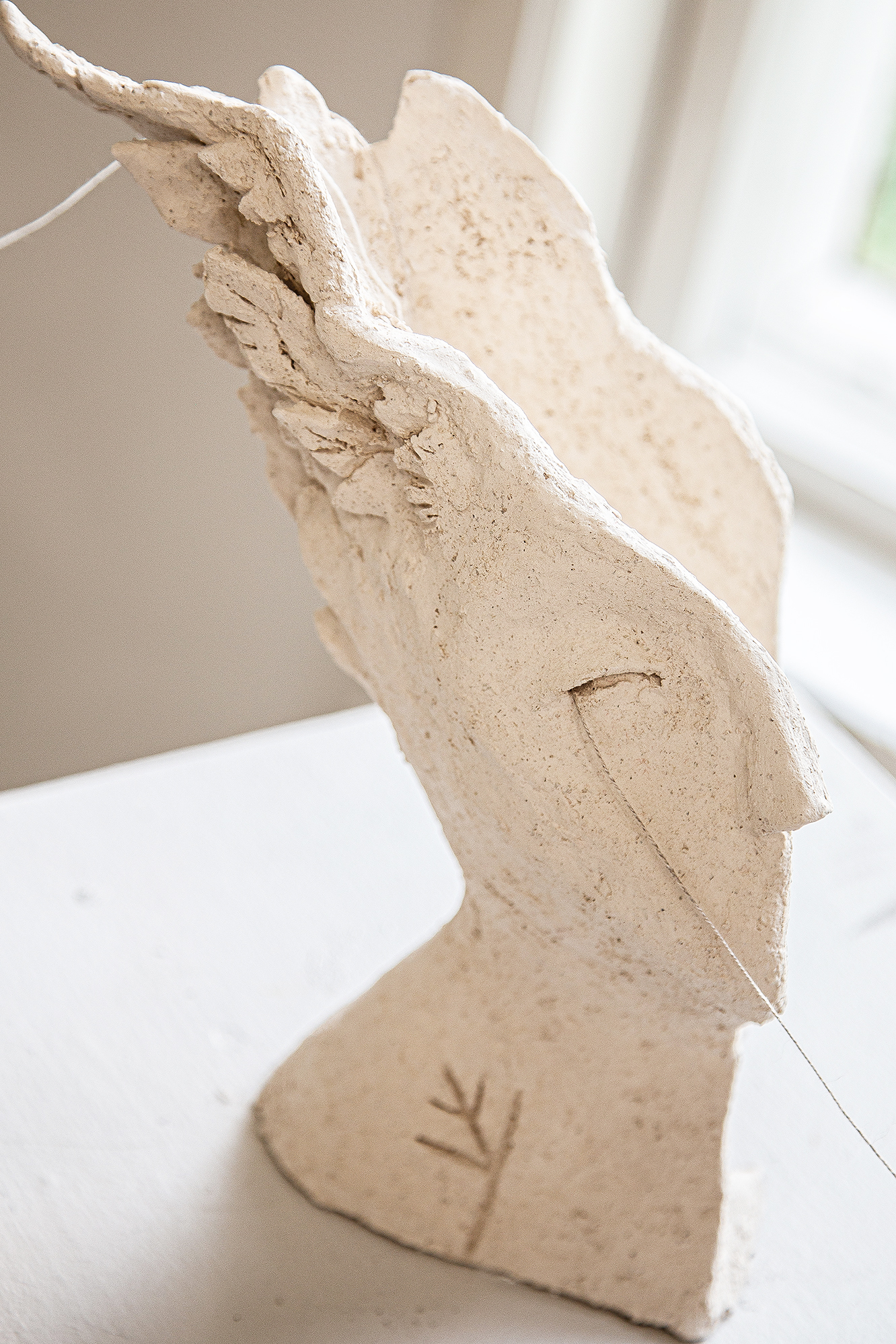
” Not all merging is complete. Some pieces here hold only longing, the wish to belong to something that perhaps can no longer be fully reached.
Hands, pigment, voice
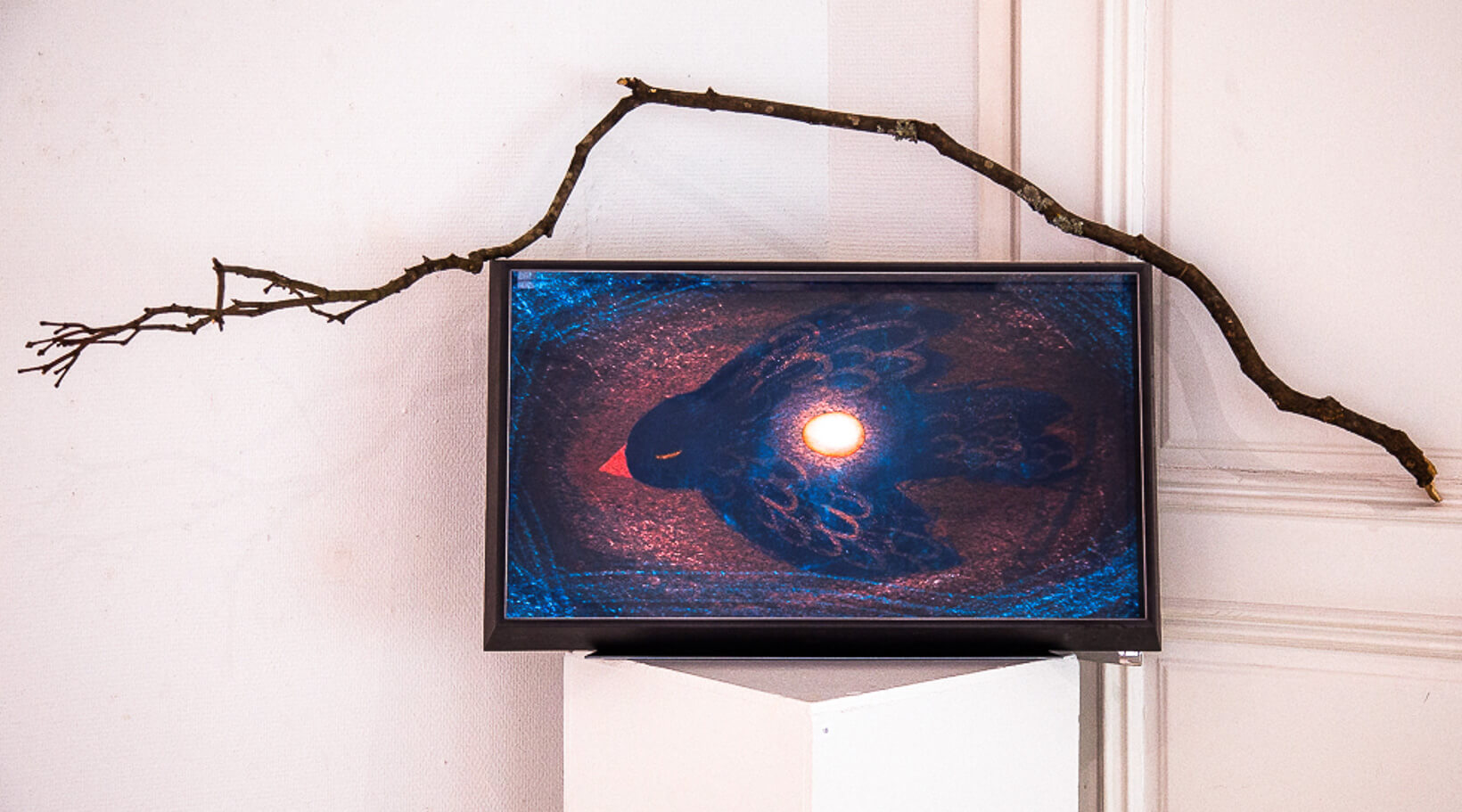
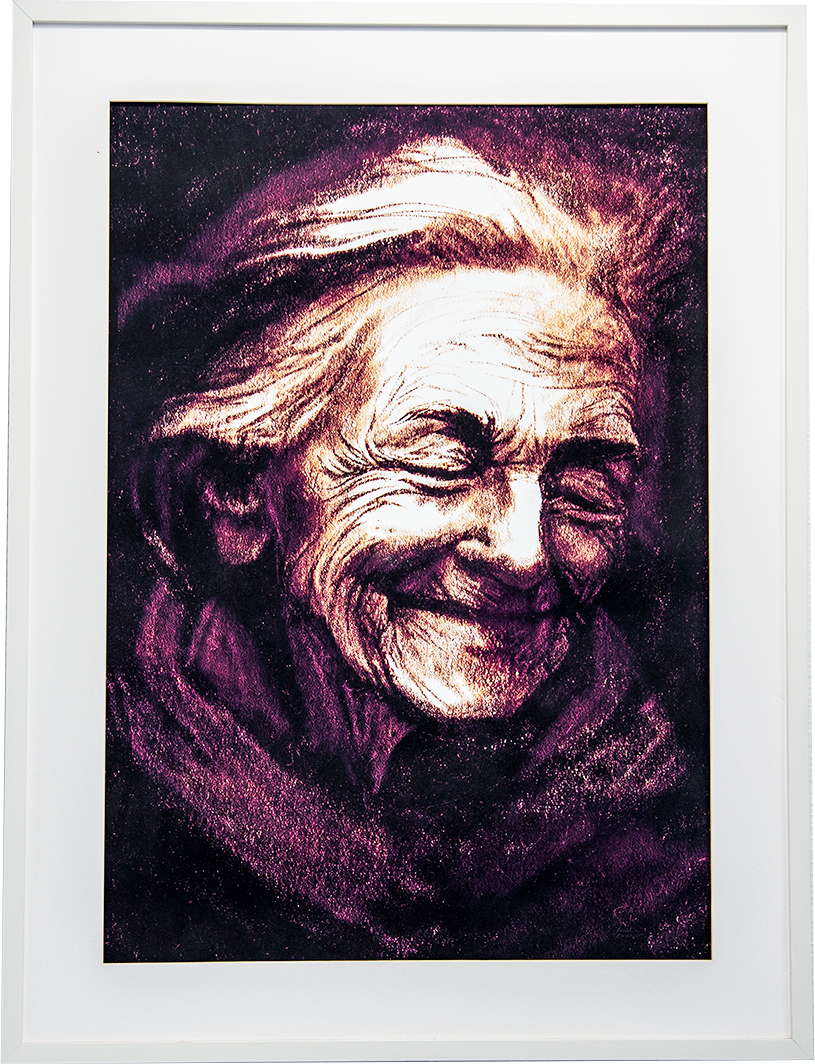
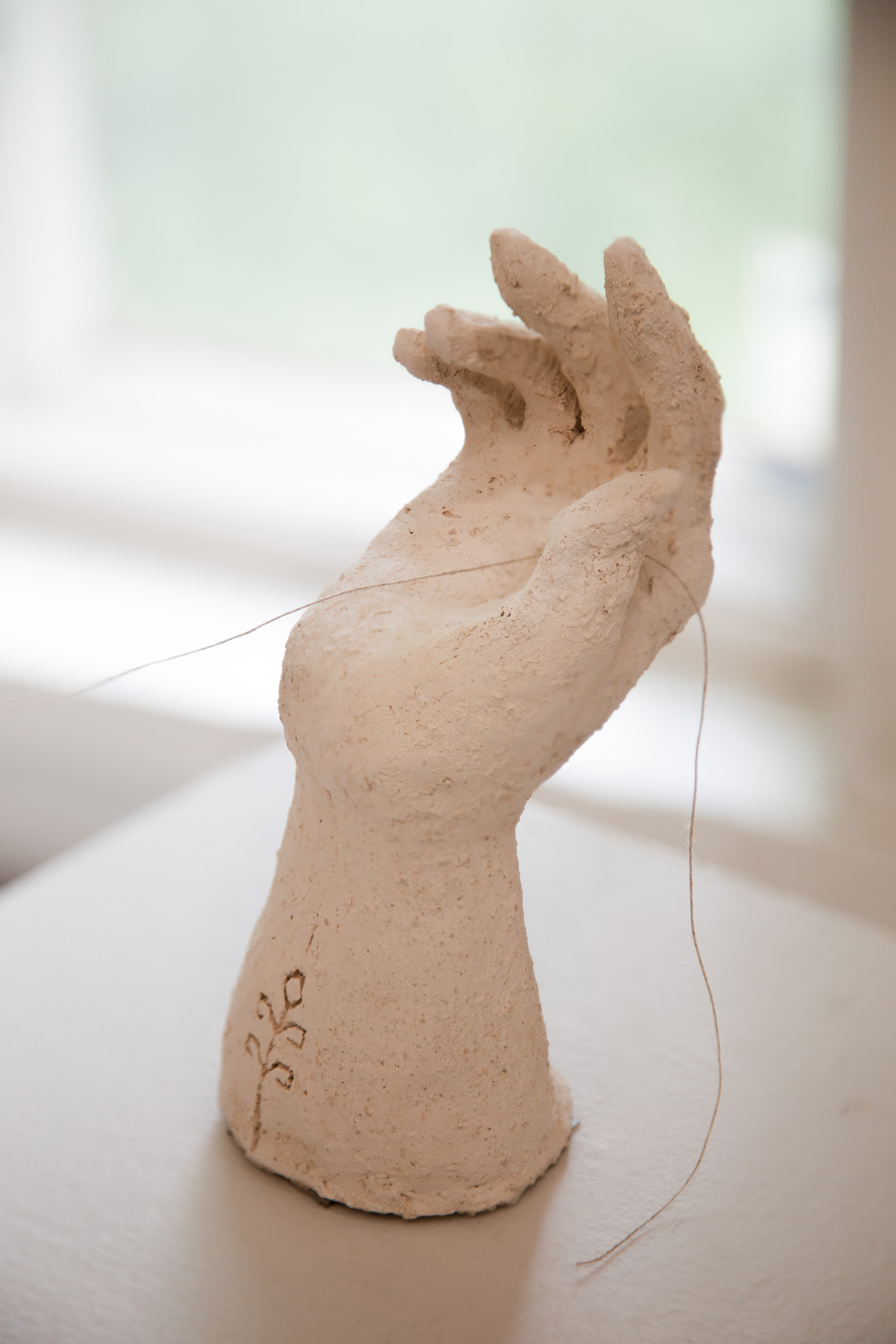
I work in painting, ceramics, textile, animation, interactive projection, and holography. I make my own paints and inks from natural, archival, non-toxic materials. Each way of making opens a different view, and together they become one conversation.
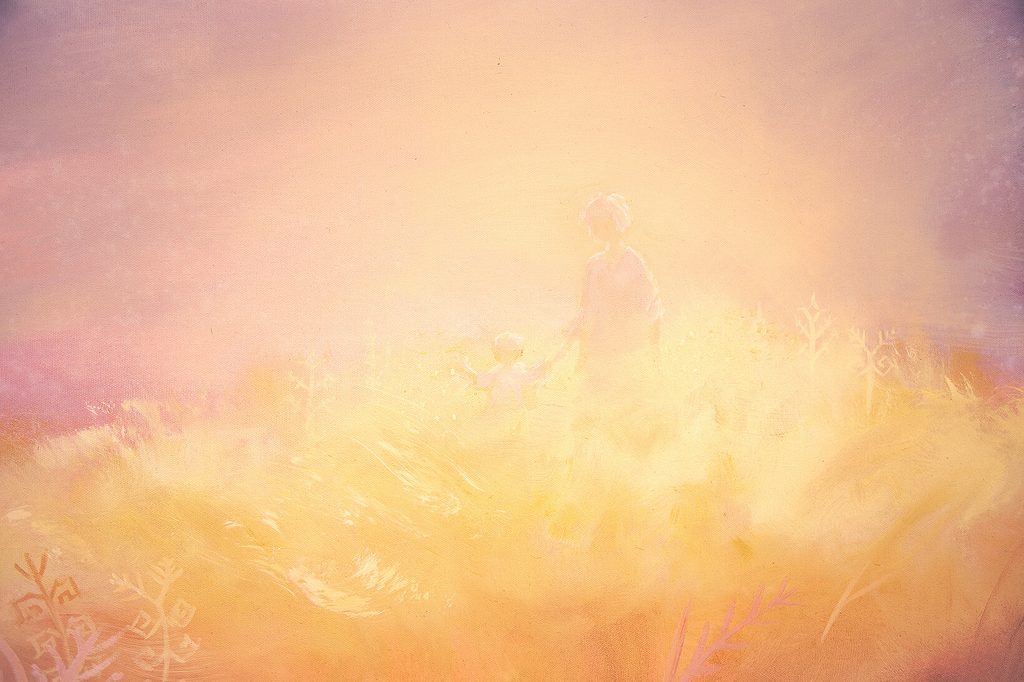
My watercolours are my own, mixed from gum arabic, glycerin, clove oil, and sometimes honey. I often model patterns digitally, and laser cut or 3D print them for use with traditional media. I mix my oil paints using safe and sustainable pigments and walnut oil.
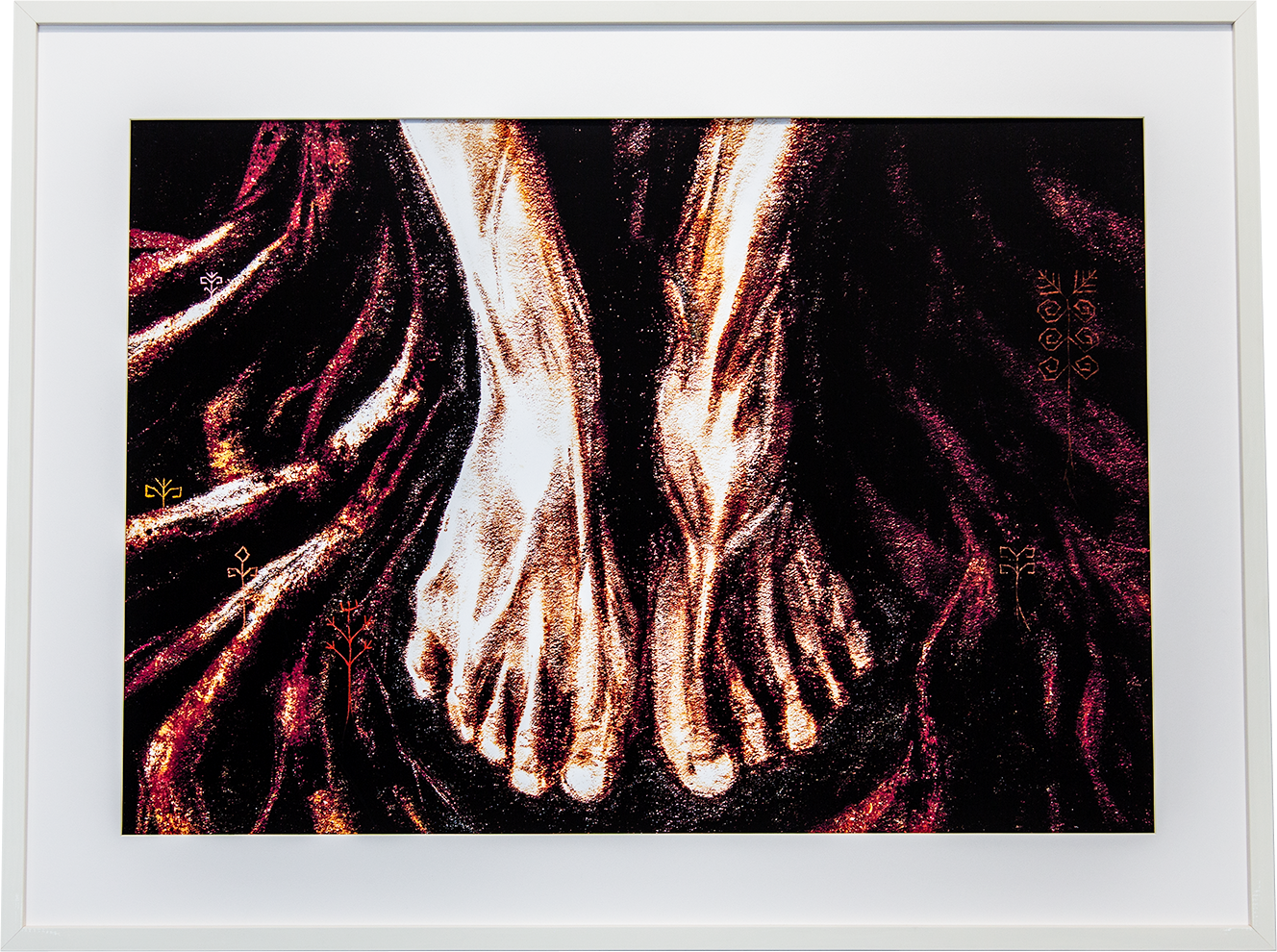
My digital art uses brushes and textures designed to feel tactile, almost touchable.
In the exhibition space, you can hear me speaking in Karelian, my grandmother’s mother tongue that got cut off in my family. It is its own language, the closest living relative of Finnish, and critically endangered.
Hands, pigment, voice
I work in painting, ceramics, textile, animation, interactive projection, and holography. I make my own paints and inks from natural, archival, non-toxic materials. Each way of making opens a different view, and together they become one conversation.
My watercolours are my own, mixed from gum arabic, glycerin, clove oil, and sometimes honey. I often model patterns digitally, and laser cut or 3D print them for use with traditional media. I mix my oil paints using safe and sustainable pigments and walnut oil.
My digital art uses brushes and textures designed to feel tactile, almost touchable.
In the exhibition space, you can hear me speaking in Karelian, my grandmother’s mother tongue that got cut off in my family. It is its own language, the closest living relative of Finnish, and critically endangered.
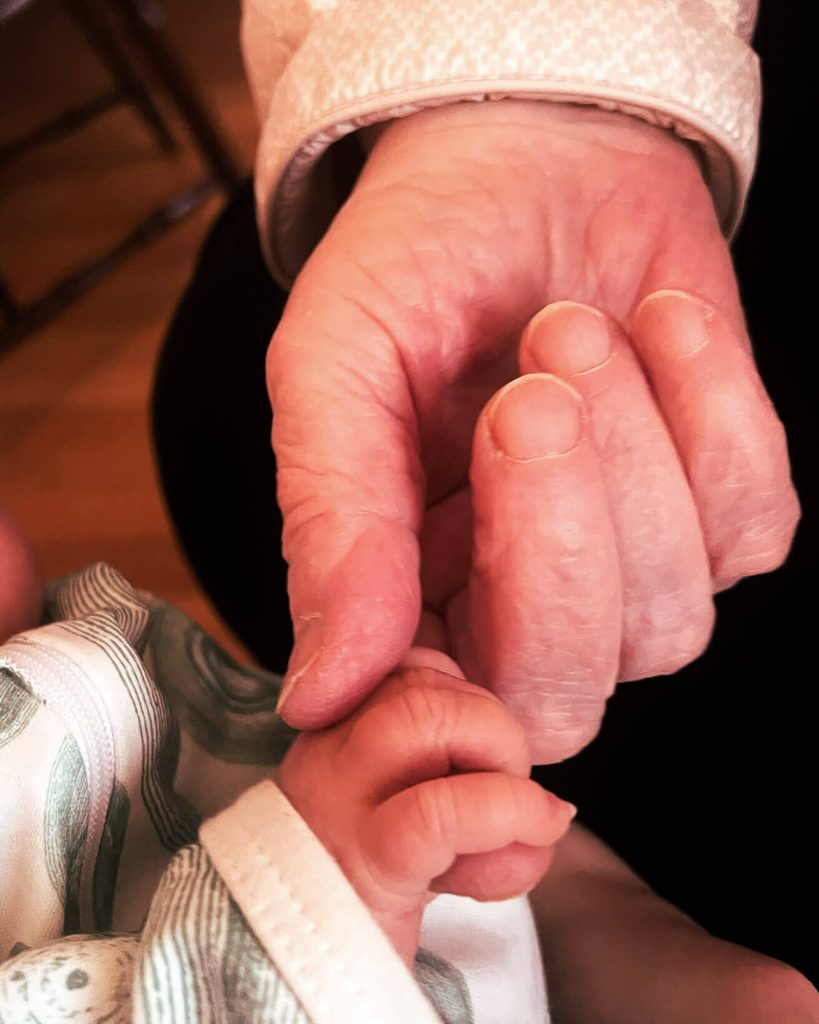
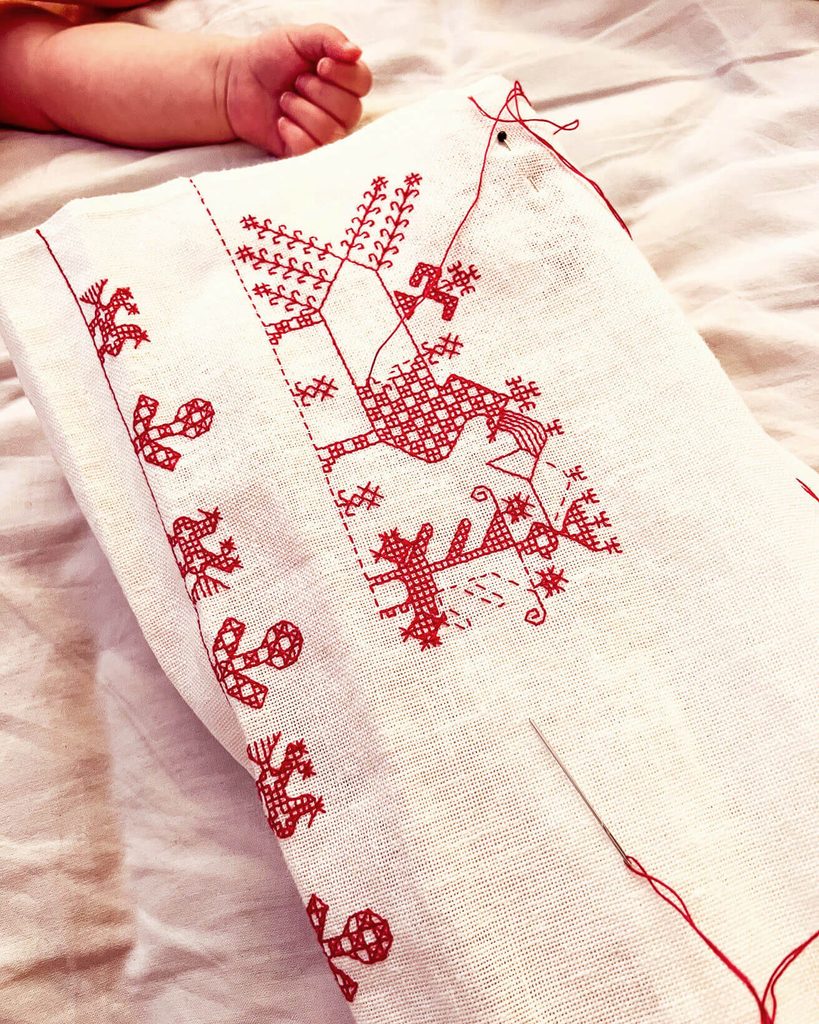
” I’m continuing what my foremother started. I hope someone, generations from now, adds to it too.

Belonging without losing shape
Yhtehsulavundu is an exhibition about what happens when the boundaries between things we normally keep separate begin to dissolve: human and animal, self and ancestor, body and symbol, the seen and the unseen. For anyone unfamiliar with Karelian culture, the exhibition still speaks plainly, because its real subject is universal: how identity, memory, and belonging are never fixed things but living processes of merging, one generation’s hands passing something into the next without ever losing what it means. The exhibition doesn’t argue for a fixed identity; it offers a different way to think about belonging, one where you can be part of something without your own shape disappearing.
New work
These two pieces were not shown at Galleria Becker, but in a group exhibition after it. They continue the same work and point toward where it goes next.
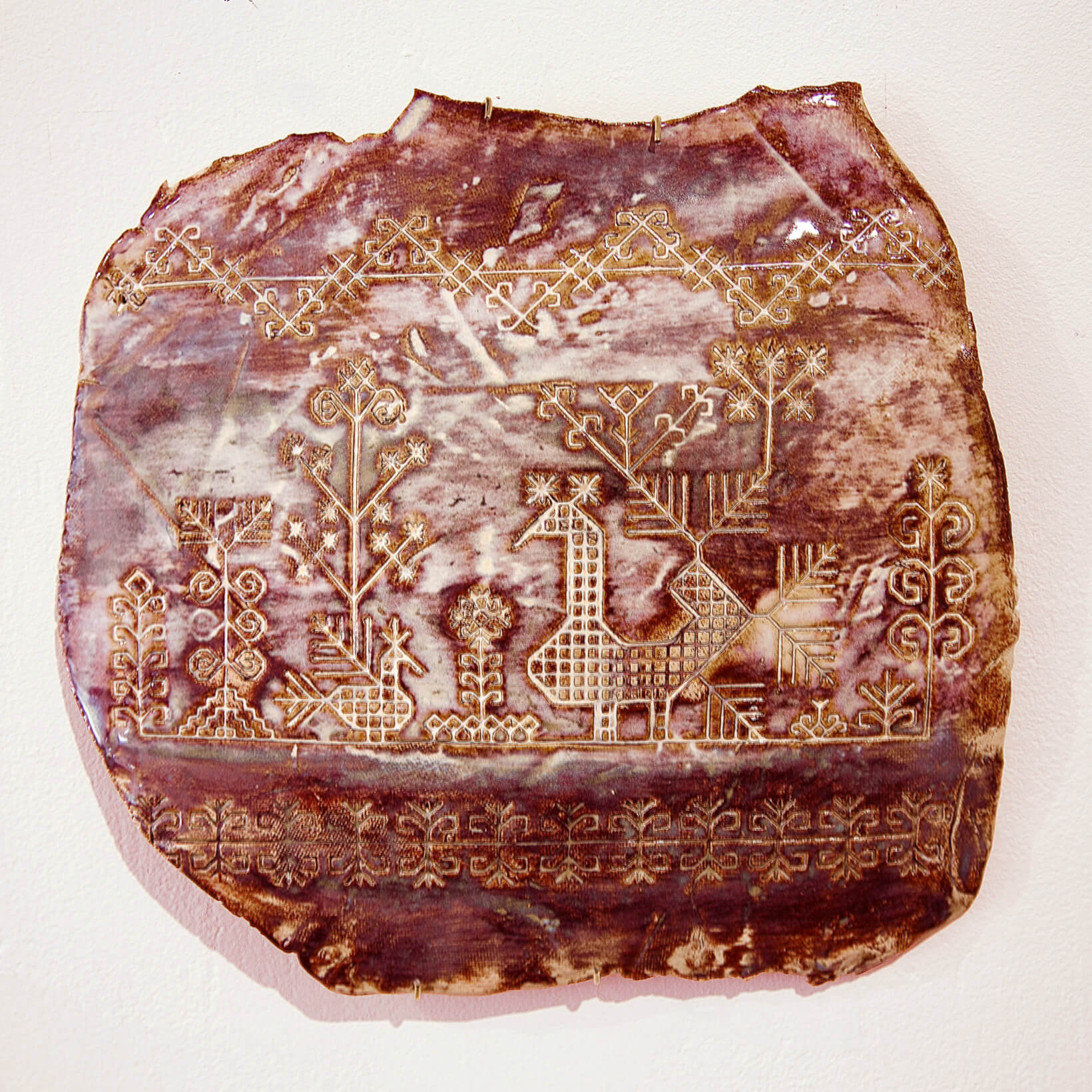
glazed ceramics · 2026 · 23x25cm